Compute for Capture Devices and Edge Boxes: RK3576, RK3588, Allwinner A733, Raspberry Pi 5 and Jetson Orin
Choosing the processor for a head-worn recorder, a multi-camera capture head or an edge AI box: what each platform is good at, where camera drivers and USB bandwidth bite, and how to benchmark before you commit.
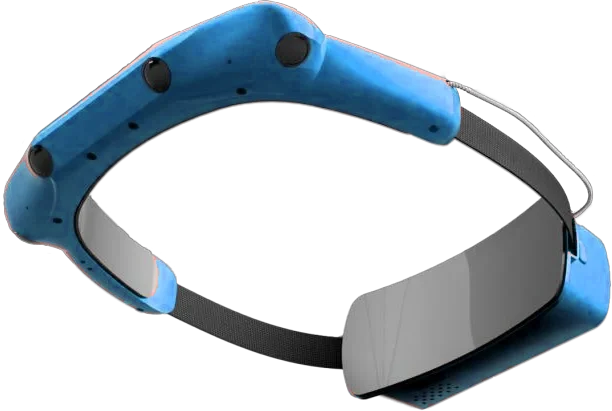
For a recorder that only acquires, timestamps and stores, a low-cost Rockchip or Allwinner board is enough. For six raw cameras or on-device models, RK3588 or RK3576 (6 TOPS NPU) covers mainstream detection at low power; Jetson Orin is the choice when you need CUDA, larger models or the GMSL camera ecosystem. Benchmark your own pipeline, not TOPS.
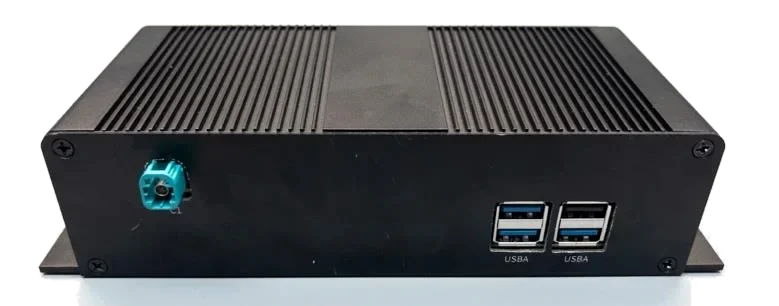
Teams often choose the processor first and discover its limits last: a USB controller shared by both cameras, a camera driver that exists only for an older kernel, or an NPU that cannot run half the model’s operators. This guide sets out what each common platform is good at in capture devices and edge boxes, using public 2026 board prices.
Three different jobs
| Job | What compute does | What matters |
|---|---|---|
| Recorder — head-worn or chest-worn | Acquire, timestamp, store or stream | USB 3 / MIPI ports, storage write speed, power, weight |
| Capture head — 4–8 cameras aggregated | Trigger, timestamp, possibly encode, transport raw to a backpack | CSI lane count, ISP throughput, Ethernet / GMSL, driver maturity |
| Edge AI box — retail, inspection | Run models on several streams continuously | Measured FPS and latency, thermals in a sealed box, fleet updates |
Platforms
| Platform | CPU | AI | Strengths | Watch for | Board price (public, 2026) |
|---|---|---|---|---|---|
| Rockchip RK3566 | 4× A55 @ 1.6 GHz | ~0.8 TOPS | Cheapest Linux recorder with USB 3 | Weak for raw stereo or encode-heavy loads | USD 31–47 (compact SBC, MOQ 100) |
| Allwinner A733 | 2× A76 @ 2.0 GHz + 6× A55 | 3 TOPS | Small, modern cores, LPDDR5 | Single USB 3 data port on small boards; young Linux support | USD 62–68 (compact SBC) |
| Rockchip RK3576 | 4× A72 @ 2.2 GHz + 4× A53 | 6 TOPS | Balanced cost/power, dual USB 3 and Ethernet on common boards | BSP version lock for camera drivers | USD 61–174 (common SBCs) |
| Rockchip RK3588 | 4× A76 + 4× A55 | 6 TOPS | Many camera inputs, 8K decode/encode, strong for multi-stream boxes | Thermals; RKNN model conversion | Board-dependent |
| Raspberry Pi 5 | 4× A76 @ 2.4 GHz | External accelerator | Best community and documentation; two 4-lane MIPI ports | No built-in NPU; camera choice tied to supported drivers | Retail |
| NVIDIA Jetson Orin (Nano / NX / AGX) | 6–12× A78AE | Up to 67 TOPS (Orin Nano Super) to 275 TOPS (AGX) | CUDA, TensorRT, deepest GMSL ecosystem | Cost, power, L4T version lock | Distributor pricing |
| Qualcomm XR2-class | XR SoC | On-device SLAM, hand tracking | What most SLAM headsets ship on | Closed stacks; raw access depends on vendor | In-device only |
Rules that save months
Count the ports, not the cores. Two USB 3 cameras on one host controller share about 3 Gbps sustained. Two MIPI cameras need two CSI ports or virtual-channel aggregation the driver actually supports.
Ask for the driver, the kernel and the BSP version. A camera “supported on Jetson” may mean one L4T release. A module “supported on RK3588” may mean a vendor kernel you cannot upgrade.
Keep algorithms off the head if you can. On-device SLAM costs watts, heat and weight. If your models run on a backpack or server, the head should acquire, timestamp and transport — then any of the cheaper platforms is enough.
Benchmark the real model. Convert your model (RKNN, TensorRT, Hailo), run it on the board with the real camera count, in the real enclosure, at maximum ambient temperature, for hours. Report sustained FPS, latency and temperature.
Plan the fleet, not the unit. Remote updates, health telemetry and recovery from power loss decide whether a 200-box pilot survives its first month.
A starting recommendation
| If you are building… | Start with |
|---|---|
| A stereo USB recorder with local storage | RK3566 / A733 class |
| A 2–4 camera capture head streaming raw to a backpack | RK3576 / RK3588, or Pi 5 for fast prototypes |
| A 4–8 camera GMSL robot head | Jetson Orin NX/AGX with a qualified deserializer carrier |
| A retail or inspection edge box | RK3588 for cost; Jetson Orin for CUDA or larger models |
See our Hardware Index for the boards and modules we track, and choosing the camera link for transport.
Frequently asked
Is RK3588 a replacement for Jetson Orin?
For mainstream detection and tracking models converted to Rockchip's RKNN format, often yes, at lower cost and power. For CUDA-dependent code, large transformer models, or GMSL multi-camera carriers with mature drivers, Jetson Orin remains the safer choice.
What compute does a head-worn recorder need?
If the device only captures, timestamps and stores, very little: a quad-core Cortex-A55 or better with a USB 3 host and fast storage. Compute grows sharply when you encode multiple raw streams, run SLAM on the device, or aggregate more than two cameras over MIPI.
Why not compare boards by TOPS?
TOPS figures assume ideal INT8 workloads and ignore memory bandwidth, operator support and conversion losses. A model with unsupported operators falls back to the CPU and runs many times slower. Measure frames per second and latency for your model on the actual board.
HOLON (2026). Compute for Capture Devices and Edge Boxes: RK3576, RK3588, Allwinner A733, Raspberry Pi 5 and Jetson Orin. HOLON-GDE-2026-006, v1.0. https://www.holonai.ai/research/capture-head-compute-rk3576-rk3588-jetson