Edge AI Boxes for Retail and Inspection: A Hardware Checklist That Survives the Pilot
What decides whether an edge-vision deployment works after the demo: model-hardware fit, camera links, thermals in sealed boxes, privacy by design, and fleet operations — with a checklist for RK3576, RK3588, Jetson and Hailo-class systems.
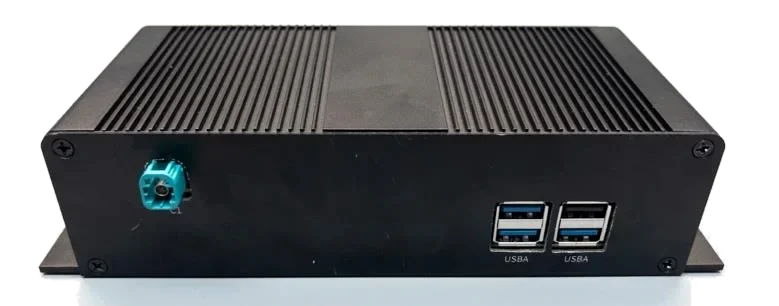
Edge-vision pilots usually fail on hardware operations, not models: throttling in sealed enclosures, camera streams that drop frames, and no update or recovery path. Choose the box by measured FPS and latency for your model at maximum ambient temperature, keep identifying data on the device, and design remote updates and health telemetry before the first store.
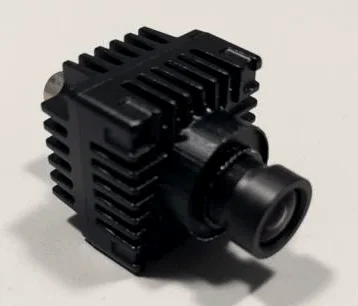
The five failure modes
- Thermal throttling. A board that runs 20 fps on the bench runs 9 fps inside a sealed box behind a ceiling tile in summer.
- Camera link instability. PoE switches, long USB runs and cheap cables drop frames silently.
- Model-hardware mismatch. Operators unsupported by the NPU fall back to CPU.
- No fleet path. No remote update, no health telemetry, no recovery after a power cut.
- Privacy as an afterthought. Frames leave the store and legal stops the rollout.
Choosing compute
| Need | Platform class |
|---|---|
| Mainstream detection/counting on 4–8 streams at low cost and power | RK3588 / RK3576 (6 TOPS NPU, RKNN) |
| CUDA code, larger models, GMSL cameras | Jetson Orin |
| Add-on acceleration for an x86 or Arm host | Hailo-8-class M.2 accelerator |
See compute for capture devices and edge boxes.
The checklist
- Model converted and benchmarked on the target board: sustained FPS, latency, accuracy delta after quantisation
- Full camera count connected, 8-hour soak, zero dropped frames
- Enclosure at maximum ambient temperature: steady-state SoC temperature and FPS
- Power-loss recovery: boots unattended to a working state
- Remote update with rollback; health telemetry (temperature, FPS, disk, uptime)
- On-device processing; only aggregated, non-identifying events leave the box
- Mounting, cable management and installer instructions tested by someone who did not design it
- Spare-unit and RMA plan for the pilot fleet
HOLON designs, builds and deploys edge-vision hardware for retail analytics and inspection teams. Talk to us.
Frequently asked
How many camera streams can an RK3588 box handle?
It depends on model size, resolution and frame rate. RK3588 decodes many 1080p streams, but NPU throughput for your detector is usually the limit. Benchmark the converted model at the frame rate the analytics actually need — often 5–15 fps for retail, not 30.
How do we keep retail analytics privacy-preserving?
Run detection and counting on the device and send only aggregated, non-identifying events. Avoid storing frames, blur or crop at the edge if any image must leave, and document this in the deployment design.
HOLON (2026). Edge AI Boxes for Retail and Inspection: A Hardware Checklist That Survives the Pilot. HOLON-GDE-2026-009, v1.0. https://www.holonai.ai/research/edge-ai-box-retail-analytics