Egocentric Data-Capture Hardware: 2026 Buyer's Benchmark
Five classes of egocentric capture device for robot learning — from phone rigs to six-camera SLAM headsets and custom builds — with specifications that matter, price and NRE bands from real 2026 quotes, failure patterns and a selection framework.
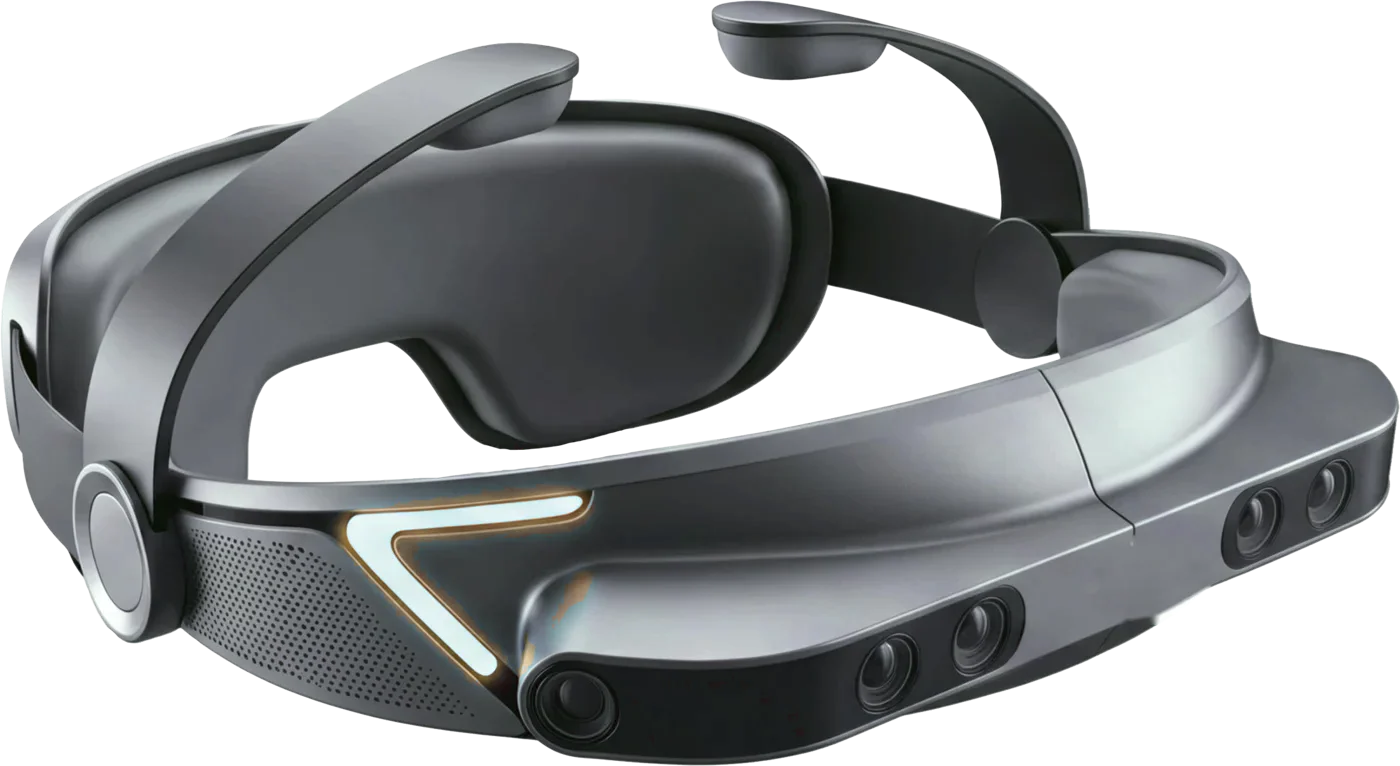
Egocentric capture hardware for robot learning falls into five classes: phone rigs, stereo RGB-IMU headsets, four-to-six-camera SLAM headsets, modular ego-plus-wrist-plus-gripper kits, and custom builds. Most teams should start from an existing SLAM-class headset and pay for targeted changes — frame rate, IMU rate, exposure timestamps, raw output — rather than a ground-up build.
Across 18+ vendors evaluated for one frontier robotics program, the gap between 'existing product' and 'training-grade' was almost always the same four items: per-function frame rate, IMU rate, exposure timestamps and raw-data access.
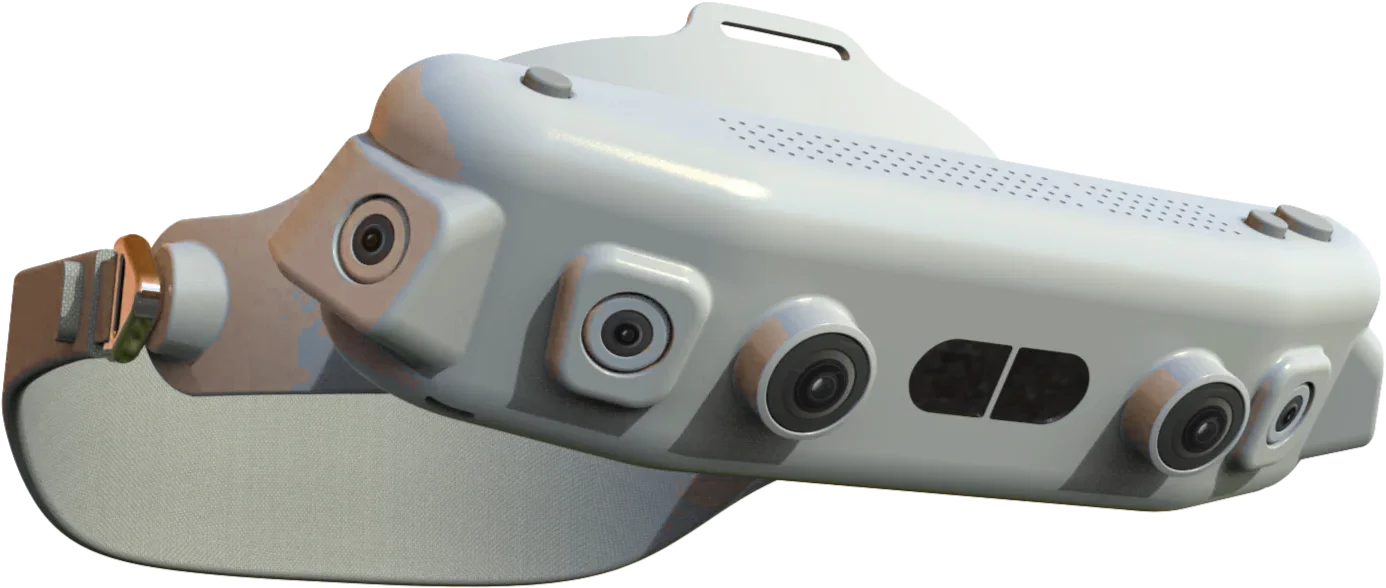
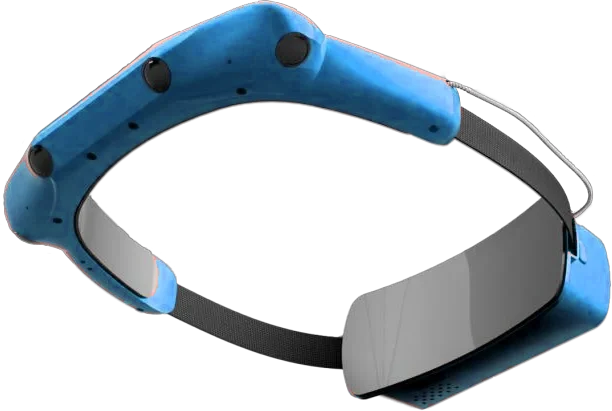
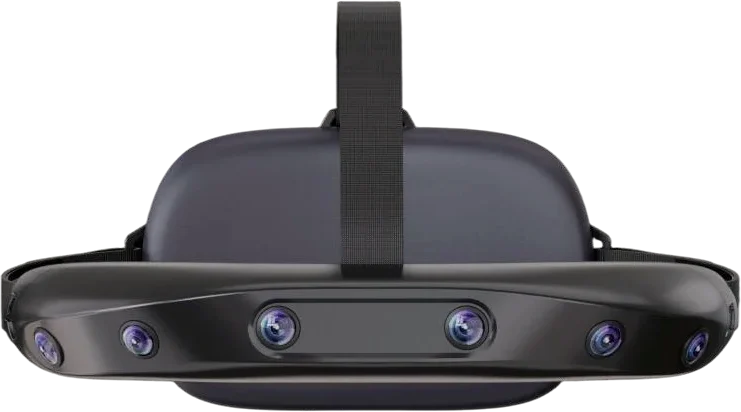
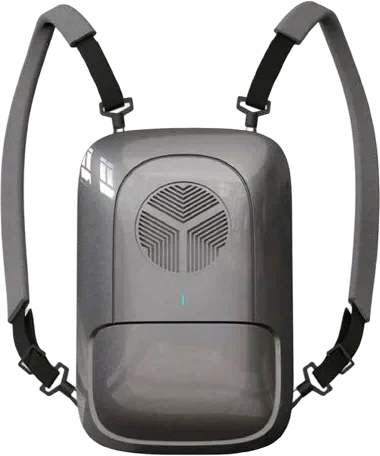
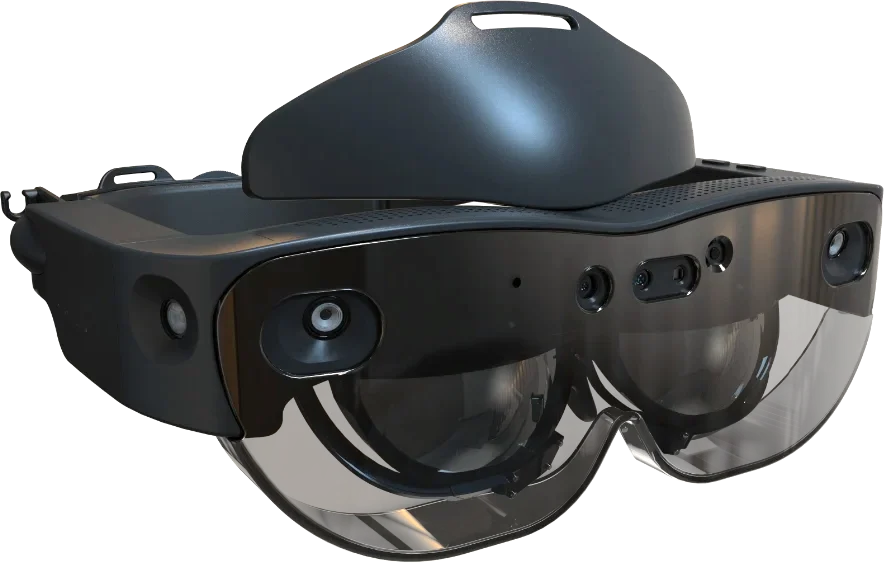
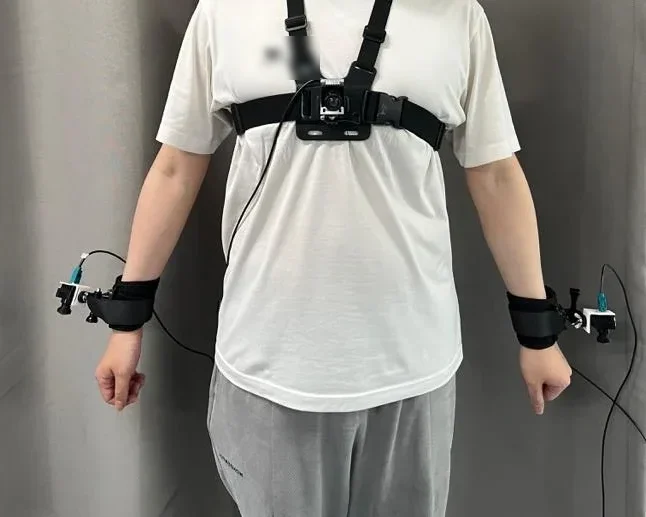
Every robot-learning team that collects human demonstrations eventually asks the same question: what should people wear on their heads? In 2026 the answer is crowded — Shenzhen, Dongguan, Shanghai and Hangzhou now produce dozens of head-mounted capture devices marketed for “embodied AI data” — and the differences that matter are rarely on the datasheet.
This benchmark distils what we learned evaluating more than 18 egocentric hardware vendors for a frontier robot foundation-model program, plus sourcing work for data-collection companies. Vendor names and confidential quotes are withheld; price bands are ranges from real 2026 quotations and public listings.
The five classes
| Class | Typical configuration | Indicative 2026 price | Strengths | Where it falls short |
|---|---|---|---|---|
| 1. Phone rig | Smartphone in a head mount, collection app | Phone + mount | Scale, cost, participant familiarity, cloud upload | No hardware sync, rolling shutter, app-controlled processing, limited FOV |
| 2. Stereo RGB-IMU headset / module | 2 × global-shutter 1080p–2 MP fisheye, 6-axis IMU, USB or on-board SD | USD 150–400 module; USD 1,000–1,500 headset | Good egocentric view, depth from stereo, simple data path | Usually 30 fps at full stereo resolution, IMU 200–500 Hz, host-side timestamps |
| 3. SLAM headset (4–6 cameras) | 4 mono global-shutter tracking cameras + 2 RGB, IMU, on-board SoC (Qualcomm XR2-class or Rockchip RK3576/RK3588), USB3 or GMSL | USD 1,000–2,500 per unit; enterprise configurations quoted on request | On-device 6DoF pose, wide coverage, hand tracking, often IR-LED tracking of handheld devices | Frame interleaving, 640×480 tracking cameras, compressed-by-default recording, closed SDKs |
| 4. Modular kit | Ego unit + wrist cameras + UMI gripper + compute, shared timebase | USD 1,000–6,500 per kit | Covers head, hands and end-effector in one coordinate frame | Each module adds weight and failure points; sync claims vary by module |
| 5. Custom / modified build | Your sensor set on a partner’s platform, or a new design | NRE USD 10,000–100,000+; MOQ often 10–5,000 | Your exact timing architecture, sensors and form factor; design ownership possible | Schedule risk, NRE, certification and support burden |
What actually differentiates devices
Datasheets lead with resolution and field of view. For robot learning, these are the specifications that decide whether data is usable:
Per-function frame rate. A SLAM headset advertising “60 fps tracking cameras” may alternate SLAM frames and infrared-tracking frames on the same sensors, delivering 30 fps to each. Ask for the frame rate each function actually receives, and whether the alternation can be disabled.
Timestamp origin. Exposure-time stamping on one clock is the requirement; host-arrival stamping is the default. See Timing Is the Spec for targets and the test we run.
IMU rate and clock. 1 kHz on the camera timebase is the robot-learning norm; 200–500 Hz on an independent crystal is the shipping default on many devices.
Raw output. Can the device stream raw or minimally processed frames from every camera simultaneously, with metadata, in a documented format? Many record H.265 by default and treat raw as a custom request.
Calibration. Per-unit factory calibration — intrinsics, camera-to-camera and camera-to-IMU extrinsics — delivered in an open format. Without it, every unit needs your own calibration pipeline.
Bandwidth headroom. Four 1280×800 mono cameras in RAW8 at 60 fps need about 2 Gbps; two 1920×1200 RAW10 RGB cameras add about 1.4 Gbps at 30 fps or 2.8 Gbps at 60 fps. USB3 Gen 1 sustains roughly 3 Gbps in practice. If the link cannot carry raw, something is being compressed or dropped.
Weight, heat and power. On-device SLAM costs watts. If your algorithms run on a backpack computer, the headset should acquire, timestamp and transport — and stay light and cool.
Software and ownership. SDK on Linux, documented data formats, the right to switch off on-device algorithms, and contractual ownership of recorded data.
What we found in 2026
The pattern across vendors was consistent enough to state plainly.
- The gap is almost always the same four items. Per-function frame rate, IMU rate, exposure timestamps and raw-data access. Resolution, FOV and form factor were rarely the blocker.
- Vendors will change firmware; they resist changing boards. Disabling frame interleaving, exposing timestamps and enabling raw streaming were typically agreed quickly. Raising IMU rate usually means a different part and a board revision — this is what drives NRE.
- NRE clusters by scope. Firmware-only changes on an existing platform were quoted in the low tens of thousands of US dollars. A board revision on an existing product landed around USD 50,000, typically with a minimum order around ten units. Fully custom six-camera designs ran from roughly USD 35,000 for two prototypes from a capable ODM to around USD 100,000 from motion-capture specialists.
- “Millisecond-level synchronisation” is the most common timing claim — useful for video, short of the < 100 µs camera-to-camera target.
- On-device intelligence is a double-edged feature. Built-in SLAM, hand tracking and body-skeleton output are genuinely useful as a reference pose, but teams training their own models need the option to turn them off and receive raw data. Ask for that in writing.
- Tracker count is a hidden ceiling. Headsets that track handheld or body-worn IR-LED devices often support only two at a time. Full-body and object tracking needs ten or more.
- Lead times are short; holidays are not. Standard units shipped in two to four weeks. Chinese New Year and National Day can each remove one to two weeks from any schedule.
A selection framework
Start from the data you need, not the device you like.
| If your priority is… | Start with | Watch for |
|---|---|---|
| Hours of natural video at scale | Class 1 or 2 | Sync, rolling shutter, participant compliance |
| Egocentric view plus head pose for imitation learning | Class 3 | Interleaving, raw access, IMU rate |
| Hands and end-effector in one frame | Class 4 | Per-module sync, weight, tracker count |
| Your own VIO and body-pose stack on a backpack | Class 3 modified, or Class 5 | Raw bandwidth, timestamp origin, calibration ownership |
| A product you will manufacture and own | Class 5 | NRE, design-file transfer, certification |
Then run a two-week sprint before committing NRE: list the requirement as acceptance criteria, map the vendors that already meet most of it, buy one standard unit of the best candidate, and measure it. A USD 2,000 unit and a week of testing routinely saves a USD 50,000 mistake.
Questions for every vendor
- Frame rate delivered to each function, with interleaving disabled?
- Timestamp origin and clock domain for cameras, IMU and audio?
- IMU part, rate and clock source?
- Simultaneous raw streaming from all cameras — format, interface and sustained bandwidth?
- Per-unit calibration in an open format?
- Can on-device algorithms be switched off? Who owns recorded data?
- Maximum number of tracked devices per headset?
- NRE for each change, separated from unit price; MOQ; lead time for modified units?
- Measured synchronisation data — method and raw files?
- Design-file and firmware-source terms for a later production version?
Limitations
Price bands reflect quotations and listings gathered in 2026 for specific configurations and quantities; they move with memory prices, volumes and scope. Vendor capabilities change quickly in this category. Class descriptions summarise common configurations, not every product.
HOLON runs Spec & Vendor Sprints and validation tests for egocentric capture hardware. See devices we track in the Hardware Index or talk to us.
Frequently asked
What is the best hardware for egocentric robot-learning data collection?
For most teams, a four-to-six-camera SLAM headset with global-shutter tracking cameras, wide-FOV RGB, a 1 kHz IMU and raw output over a wired link. Phone rigs are fine for scale video; stereo RGB-IMU headsets are a good middle ground; custom builds are justified only when timing or form factor cannot be met.
How much does an egocentric data-collection headset cost?
In 2026 quotes we saw roughly USD 150–400 for stereo USB camera modules, USD 1,000–2,500 per unit for four-to-six-camera SLAM headsets, USD 1,000–6,500 for modular and research-grade kits, and USD 10,000–100,000+ NRE for modified or custom builds, often with minimum orders of 10 units or more.
Should we build our own egocentric headset?
Only after checking what exists. In our evaluations, an existing device plus a scoped firmware or board change met most requirements faster and cheaper than a new design. Custom builds make sense when you need a specific timing architecture, sensor set or form factor no vendor offers, and when you will own the design for production.
HOLON (2026). Egocentric Data-Capture Hardware: 2026 Buyer's Benchmark. HOLON-RPT-2026-002, v1.0. https://www.holonai.ai/research/egocentric-capture-hardware-2026