Can a Pet Collar Measure Heart and Breathing Rate? An Engineering Evidence Plan
What a collar-mounted motion or pressure sensor can and cannot measure in dogs and cats, why ballistocardiography is hard at the neck, and the architecture and validation plan that keeps product claims honest.
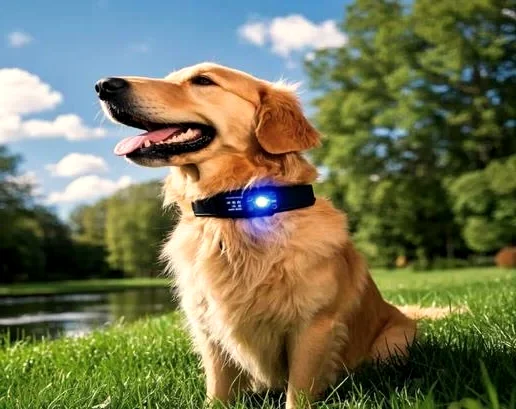
A collar can plausibly estimate resting heart rate and respiratory rate from mechanical signals when the animal is still, with signal-quality gating and animal-specific validation. It cannot measure core temperature, blood oxygen or blood pressure on its own. Claims should be limited to what a synchronised reference has verified, and the device must report 'insufficient signal' instead of guessing.

Connected collars increasingly promise “vital signs”. The physics allows some of that, under conditions. The engineering job is to make those conditions explicit.
What is plausible
| Output | Mechanism | Collar feasibility | Claim status |
|---|---|---|---|
| Resting heart rate | Mechanical recoil from each heartbeat (BCG) | Plausible at rest with good coupling | Prototype, validate against ECG |
| Respiratory rate | Breathing-induced motion | Plausible at rest; panting is different | Prototype, validate against reference |
| Activity, posture, sleep proxy | Accelerometry | Good | Separate, well-understood claim |
| Heart-rate variability | Beat-to-beat timing | Demanding; missed beats bias it | Research only until ECG-validated |
| Core temperature | — | Not measurable at the collar | Skin/near-body trend only |
| SpO₂, blood pressure | — | Not from BCG; optical or cuff methods needed | Do not claim |
Why the neck is hard
The cardiogenic signal is small and its shape depends on sensor location. Fit, coat, breed, collar rotation, scratching, chewing and tags all change coupling or add noise. Algorithms tuned on beds or chest straps do not transfer automatically.
Architecture we recommend
- A low-noise sensing front end — accelerometer/gyroscope or piezo pickup with an owned analog chain and a 24-bit ADC — streaming raw samples, not vendor-decoded values.
- Temperature at the pad and in collar-local air, reported as a trend.
- A coupling or fit indicator to detect looseness and rotation.
- A signal-quality index and an explicit insufficient-signal state.
- Raw windows, orientation and quality scores stored for audit.
Validation plan
- Freeze intended-use claims: species, weight range, coat types, activity state, sampling interval.
- Bench verification: sample-rate accuracy, noise floor, timing drift, simulated cardiac and respiratory signals, fit and rotation sweeps, tag-impact and vibration challenges.
- Reference trials: synchronised ECG and respiratory references across breeds and sizes, at rest and in normal activity.
- Report honestly: agreement statistics with confidence intervals, coverage (the share of time a valid reading was available), and failure conditions.
This is the approach we applied when helping a pet-health company move from a supplier collar to an owned sensing platform — see the case study.
Frequently asked
Can a smart collar measure a dog's temperature?
A collar can measure skin or near-body temperature trends with a well-placed sensor, plus ambient temperature for context. That is not core body temperature, and should not be marketed as such without validation.
Why are collar heart-rate readings often zero or missing?
The cardiac signal at the neck is tiny and easily overwhelmed by movement, fur, collar looseness and tag impacts. A well-designed device withholds a reading when signal quality is low instead of reporting a misleading value.
HOLON (2026). Can a Pet Collar Measure Heart and Breathing Rate? An Engineering Evidence Plan. HOLON-FN-2026-003, v1.0. https://www.holonai.ai/research/pet-collar-heart-respiration-sensing