How to Read a Shenzhen Camera-Module Quote (and the Eight Questions That Expose a Bad One)
Camera-module datasheets and quotes from Shenzhen and Dongguan routinely contradict themselves. What to check — sensor, delivered mode, trigger, IMU, distortion, calibration, SDK and price basis — before ordering samples.
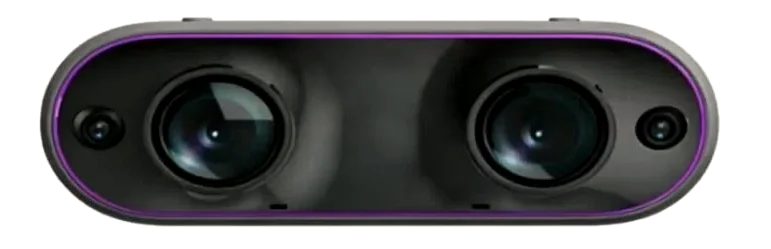
Treat every camera-module quote as a hypothesis. Confirm the exact sensor, the delivered resolution, frame rate and format per interface, whether a trigger pin is exposed, IMU part and rate, measured distortion for the actual lens, per-unit calibration, SDK status and what the price includes. In our 2026 reviews, most datasheets contradicted themselves on at least one of these.
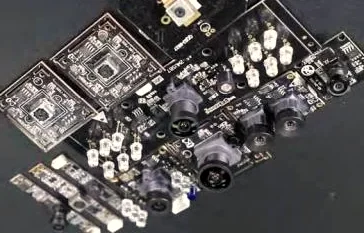
In 2026 we reviewed dozens of stereo and mono camera-module datasheets and listings from Shenzhen, Dongguan and Guangzhou for robot-learning and wearable clients. The modules were often good. The documents rarely were.
What we saw repeatedly
- Model numbers that changed mid-document — header says one model, spec table another.
- Sensor names that disagreed between datasheet, drawing and listing.
- “60 fps” that was MJPEG only; raw or YUV ran at 30 fps or 15 fps over USB 2.0.
- Distortion figures that varied between the spec table and the drawing by tens of percentage points.
- “Hardware sync” without a trigger pin on the connector.
- IMU “where required” — i.e. not populated unless ordered.
- SDK “to be provided”.
- Listing prices for a different variant from the datasheet.
The eight questions
- Exact sensor part and variant (colour/mono, CRA)?
- Delivered resolution, frame rate and format for each interface mode (RAW/YUV/MJPEG)?
- Is the sensor frame-sync input wired to the connector? Pinout?
- IMU part, sample rate, clock source, and how IMU samples are timestamped against frames?
- Distortion and horizontal FOV measured with the shipped lens on this sensor?
- Per-unit calibration: which parameters, what format, stored where?
- SDK and driver: delivered now, which OS and host platforms, source available?
- What exactly does the price include — lens, cable, housing, calibration — at what MOQ?
Then order two, not twenty
Two samples of the two best candidates, measured on your host with your pipeline, cost less than a week of engineering time spent on the wrong module. Measure frame rate, dropped frames, sync with an LED test and FOV with a target before scaling. Our Hardware Index lists the modules we source and can sample for you.
Frequently asked
Why do Chinese camera-module datasheets contradict themselves?
Datasheets are often reused across model variants and edited by sales teams. Header model numbers, sensor names, resolutions and dimensions drift between the cover, the spec table, the drawing and the online listing. Always ask which one is authoritative for the unit you will receive.
HOLON (2026). How to Read a Shenzhen Camera-Module Quote (and the Eight Questions That Expose a Bad One). HOLON-FN-2026-001, v1.0. https://www.holonai.ai/research/reading-shenzhen-camera-module-quotes