Turning a frontier lab's egocentric-capture requirement into a buildable, testable hardware programme
Client: US frontier robot foundation-model company
A robot foundation-model team needed head-worn capture hardware with microsecond-class synchronisation, raw data and many body trackers. We translated the requirement into vendor-testable acceptance criteria, mapped the Chinese supply base, and structured an M1 fleet programme around an existing SLAM platform instead of a ground-up build.
The problem
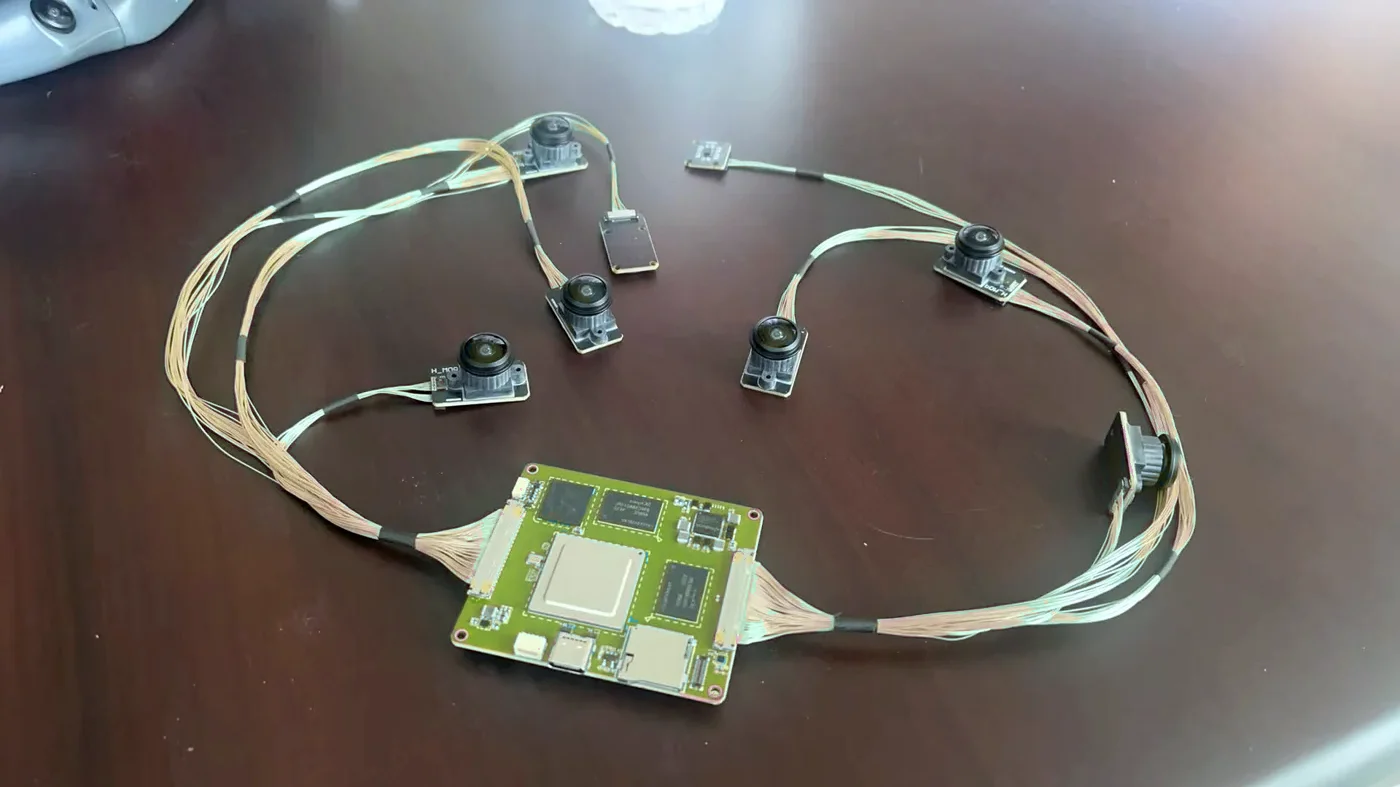
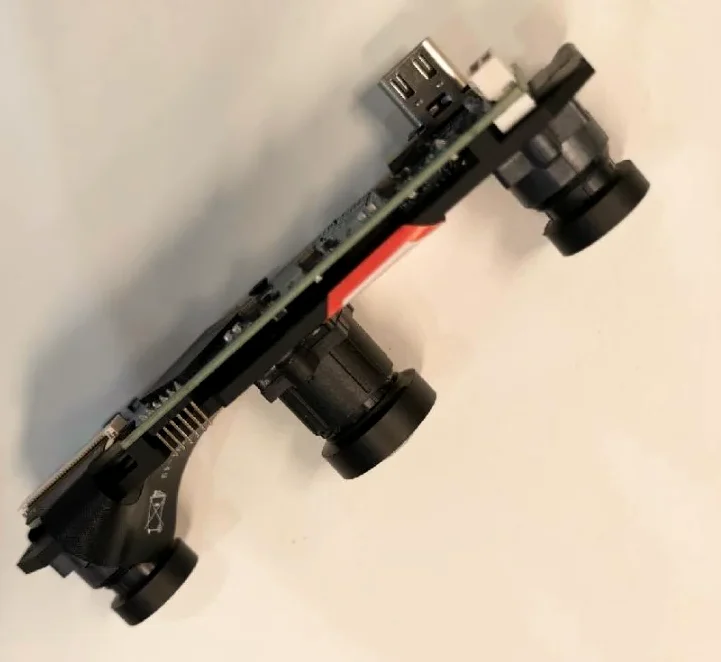
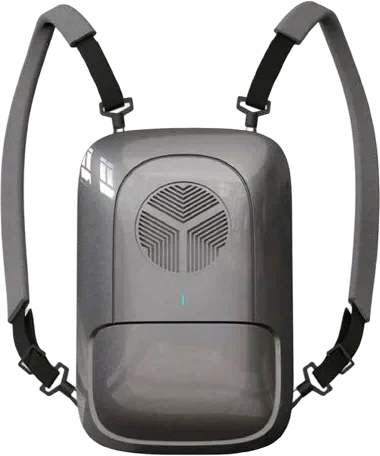
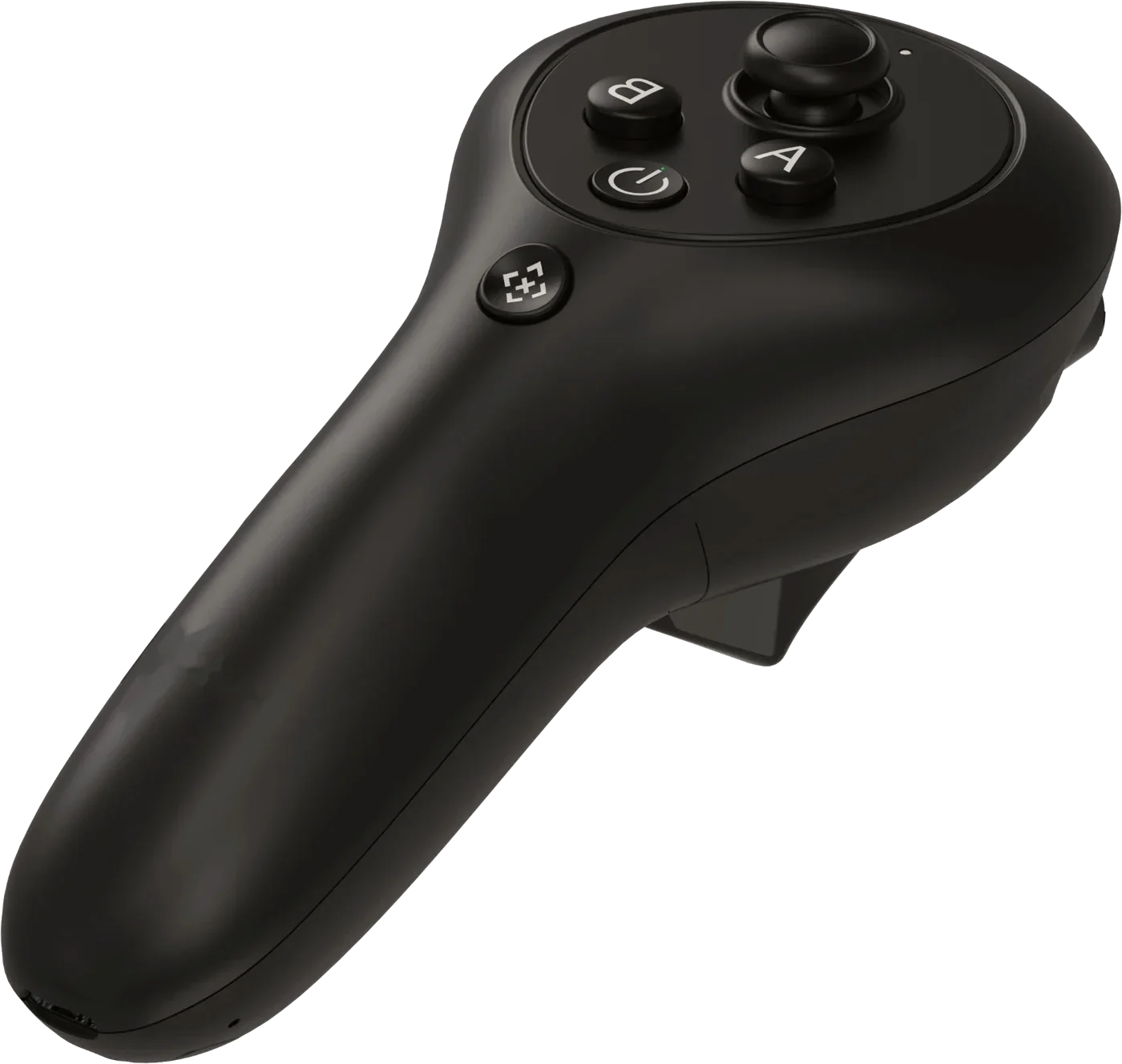
The client’s research team wrote a precise requirement for an egocentric headset and body trackers: four monochrome global-shutter tracking cameras, two RGB cameras, a 1 kHz IMU, UWB ranging, exposure-aligned timestamps on one clock, and raw output to a backpack computer running the team’s own algorithms. They also needed ten or more body trackers per person.
Off-the-shelf devices met parts of it. None met all of it, and every vendor described its synchronisation as “no problem”.
What we did
Translated the requirement into acceptance criteria. Each line became something a vendor could quote against and we could measure: timing bounds per path (camera↔camera, camera↔IMU, RGB↔tracking clock, UWB↔system), timestamp origin, raw-data format, calibration delivery and data ownership. We published the general version as Timing Is the Spec.
Mapped the supply base. We evaluated more than 18 egocentric hardware vendors across Shenzhen, Dongguan, Shanghai and Hangzhou and built a component-level sourcing file — sensors, modules, fisheye lenses, dual-band filters, IMUs, UWB SoCs, LEDs, batteries and assembly — with 38 verified supplier routes and published prices where they existed.
Found the gap, not a new product. The pattern was consistent: resolution and field of view were rarely the blocker; per-function frame rate, IMU rate, exposure timestamps and raw access were. That made the case for modifying an existing six-camera SLAM platform — with on-device algorithms switched off and raw streams exposed — instead of a ground-up custom build.
Structured an M1 fleet programme. A ten-headset first batch with milestone gates tied to a live demonstration and a measured acceptance test, per-unit factory calibration, and written answers from the vendor on every timing question.
Solved the side problems that stall programmes. A partner with completed MIPI→GMSL2 bring-up on Jetson for multi-camera transport; and a tracker strategy covering off-the-shelf testing, vendor-supported LED trackers, and a custom LED + UWB puck reference design.
Why it matters
The cost of the wrong headset is not the unit price; it is months of data with a timing error nobody measured. The programme put measurement before money.
Building hardware that has to learn? Talk to us.
Send a spec, a sketch, or just the problem. We reply within 24 hours (HKT), usually the same day.